Physical Address
304 North Cardinal St.
Dorchester Center, MA 02124
Physical Address
304 North Cardinal St.
Dorchester Center, MA 02124

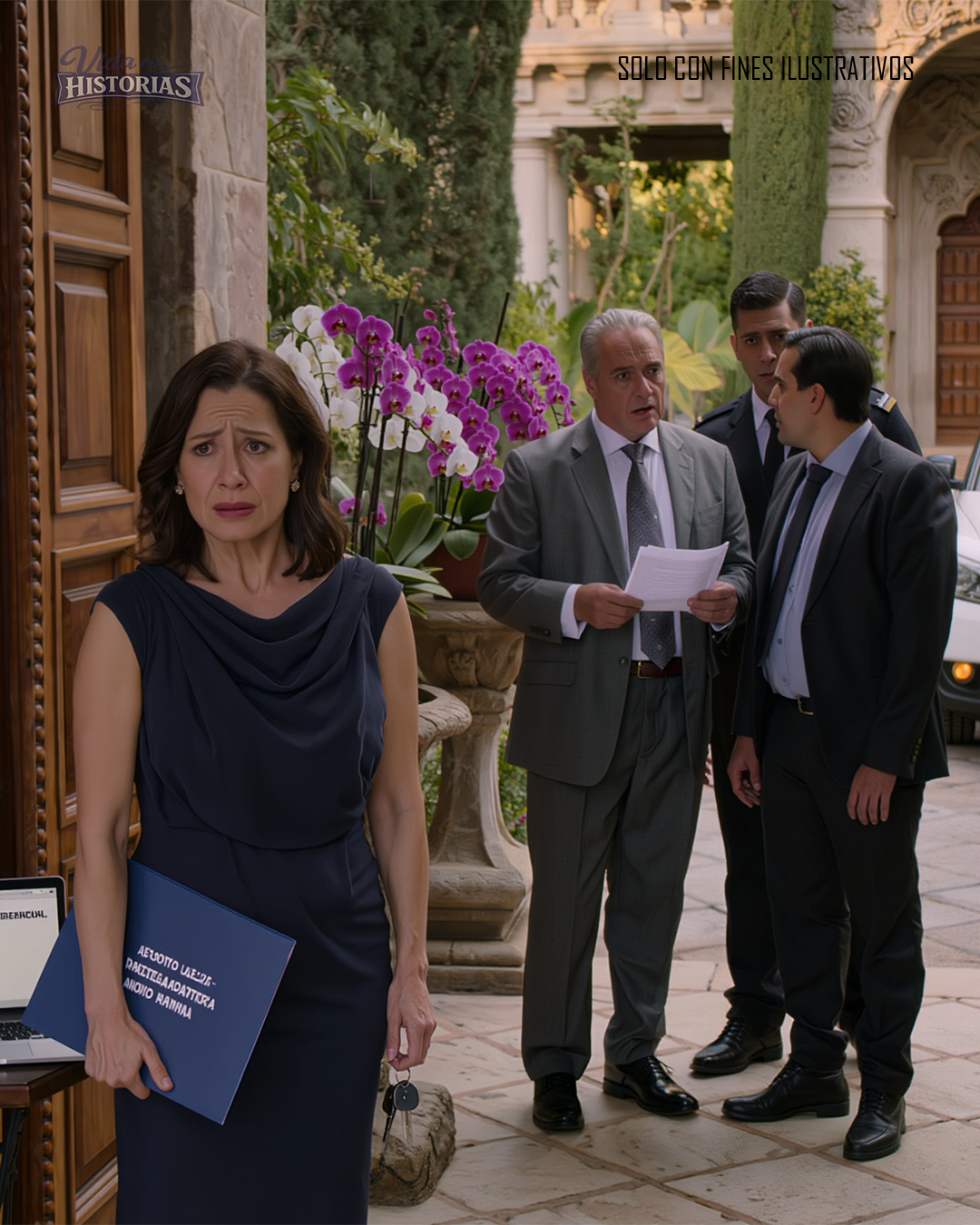
The last thing my husband Mateo Hernandez asked of me before he died was something I could never forget.
He was lying on a white bed in a Mexico City hospital, with pale skin, a weak voice, and eyes filled with a fear I had never seen in him before.
“Lucía… promise me something,” he whispered, squeezing my hand with what little strength he had left. “Never go to the house in Valle de Bravo. No matter what happens, don’t go.”
I didn’t understand. Mateo had never mentioned any house in Valle de Bravo. During twenty-two years of marriage, we shared bills, debts, dreams, sorrows, raising our daughter Camila, and even our silences. But he never mentioned a house.
Even so, when someone you love is saying goodbye, you don’t argue.
“I promise you,” I said, crying into his hand.
Mateo closed his eyes in relief. Three hours later, he died.
For the first two months, I lived as if I were walking underwater. Every corner of our house in Coyoacán held something of him: his engineering books, his blue mug, his glasses on the nightstand, the scent of his cologne still lingering on the sweaters. Camila returned to university in Puebla, trying to be strong, but their late-night calls always ended the same way: both of us crying silently.
One morning, I received a call from Licenciado Salgado, Mateo’s lawyer.
—Doña Lucía, your husband left instructions to give you something after his death.
In his office, the lawyer placed a small wooden box and a yellowed envelope in front of me. Inside the box was an old, heavy key with an orchid-shaped keyring. On the envelope was my name written in Mateo’s firm handwriting.
I opened the letter with trembling fingers.
“My Lucía:
If you’re reading this, it means I left too soon. Forgive me for the secrets. The house in Valle de Bravo exists, and now it’s yours. I asked you not to go because for years I wanted to protect you from my past. But I can no longer protect you with my presence. I can only leave you with the truth. Go there once. You’ll find my laptop in the study. The password is the date we met, followed by the word ‘bougainvillea’. I love you more than I could ever tell you.
Mateo.”
I felt the air disappear.
“Which house?” I asked the lawyer.
Attorney Salgado sighed.
“It’s called The Bougainvillea Garden. Her husband bought it four years ago. It was a family property. I should also warn you that her siblings are contesting the will.”
“Your brothers?” I repeated.
Mateo almost never spoke about them. He only knew their names: Ramiro, Esteban, and Julián. When I asked about his childhood, he changed the subject.
“They say Don Mateo wasn’t mentally fit to buy or inherit that property,” the lawyer explained. “The problem is that the land has become very valuable. A company wants to build a resort near the lake.”
That same afternoon I drove to Valle de Bravo.
The wooden gate was draped with purple bougainvillea cascading down its walls. Opening it, I saw a vast, light-colored stone house surrounded by immaculate gardens, fruit trees, and stone pathways. It didn’t seem like a dark secret. It seemed like a love letter painstakingly crafted.
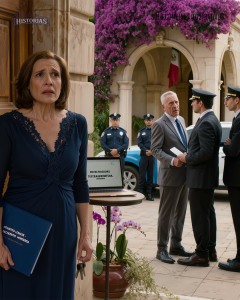
I entered with my heart pounding in my chest. The room had a high ceiling, a stone fireplace, and walls covered in paintings of flowers. Orchids, bougainvillea, dahlias, calla lilies. Flowers I had loved all my life. Flowers Mateo pretended to listen to distractedly when I spoke of them, though in reality he remembered everything.
The laptop was on a table next to a window open to the garden.
Before I touched it, I heard tires on the gravel.
A black car pulled up behind mine. Three men got out. I recognized them without knowing them: the same forehead as Mateo, the same gaze. But there was no tenderness in them. There was haste. There was ambition.
The older man knocked on the door.
—Lucía, we know you’re there. I’m Ramiro Hernández. We need to talk.
I didn’t open it. Something inside me, an ancient and protective voice, commanded me to seek the truth about Matthew first.
I turned on the laptop. The password worked.
A folder appeared on the screen: “For Lucia”.
Inside there were hundreds of videos.
I opened the first one.
Mateo appeared sitting in that same room, healthy, with his tired and sweet smile.
—Hello, my love. If you’re seeing this, it means you broke your promise. I don’t blame you. You were always more brave than obedient.
I covered my mouth to keep from screaming.
“I recorded a video for every day of your first year without me,” he continued. “Not to replace my presence, but to tell you what I should have told you while I was alive.”
Outside, the knocking on the door grew louder.
—Three years ago I was diagnosed with a brain aneurysm. The doctors said I could live for months or years, nobody knew. I didn’t tell you because I didn’t want our life to become a waiting room for death. Maybe I was selfish. Maybe I was a coward. But every day with you was real.
I cried with anger and love at the same time.
“I bought this house because I was unhappy here,” Mateo said. “My father drank, my brothers made fun of me, and the only beautiful thing I had was a small greenhouse where I grew orchids. Ramiro destroyed it when I was seventeen. I swore I’d never come back. But when I knew I didn’t have much time left, I wanted to transform the most painful place in my life into a refuge for you.”
The banging on the door stopped. Through the window, I saw Ramiro talking on the phone, his expression furious.
“My brothers are coming for the house,” Mateo warned in the video. “Not because they care about the family, but because the land is worth much more than you can imagine. There’s a blue folder in the left drawer of the table. Everything’s in there: deeds, payments, contracts. The house is legally yours.”
I opened the drawer. The folder was there.
Five minutes later a patrol car arrived. Ramiro was smiling as if he had already won.
I opened the door with the folder against my chest.
“Mrs. Hernandez,” the policeman said, “these gentlemen have a warrant to search the property.”
—Before that, officer, check this out.
I handed him the documents.
Ramiro took a step forward.
—My sister-in-law is upset. She’s just been widowed. She doesn’t understand family matters.
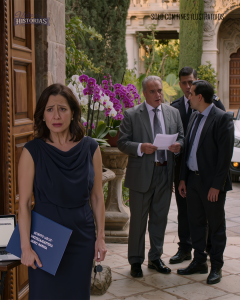
I looked him in the eyes.
“I’m not upset. I’m on my property, defending my husband’s last gift against three men who only showed up when they smelled money.”
The policeman read the papers. His expression changed.
—Gentlemen, there is no reason to enter today. Everything appears to be in order.
Ramiro turned red.
—This isn’t going to stay like this.
—I know —I replied—. Matthew knew it too.
That night I slept at the house, though I didn’t really sleep. I watched more videos. In one, Mateo showed me a painting studio hidden at the end of the hall. The next day I found it: easels, canvases, brushes, new paints, and, in a closet, all my college artwork that I thought was lost.
There was a note about my youthful self-portrait:
“She’s still there, Lucía. The woman who painted the world before she forgot herself.”
I fell to my knees, hugging that painting. Mateo hadn’t just left me a house. He had given me back a part of myself.
But the happiness was short-lived.
Camila arrived on the third day accompanied by Ramiro.
“Mom, my uncles explained everything to me,” she said, her voice tense. “Dad hid this house. They just want a fair agreement.”
I felt a stab wound.
Ramiro put a hand on my daughter’s shoulder.
—We don’t want to fight. We just want to divide what has always been family.
“Family?” I asked. “They didn’t look for her in twenty years.”
Camila looked at me with tears in her eyes.
—They were also Dad’s family. Maybe you don’t want to see that.
I didn’t argue. I knew my daughter was hurting, and those who are hurting easily believe anyone who offers them a more comforting version of lost love.
That afternoon, the greenhouse caretaker, Doña Lupita, took me to an old shed behind the house.
—Don Mateo said that if things got bad, I should show him this.
Beneath some boxes was a trapdoor. We went down a narrow staircase to an underground room filled with maps, files, and computers.
—He called it “the vault” —Lupita said.
That’s where I discovered the real twist.
The resort didn’t just need a piece of land. It needed precisely the western portion of my property to build a golf course and a private road. Without El Jardín de las Bugambilias, the project would lose millions. Mateo had gathered evidence of everything. There were also documents about his brothers’ shady dealings: fraud, forged contracts, threats.
That night I called Camila.
—I only ask one thing of you. Watch a video of your dad. Then decide.
We met at a café far from Ramiro. I put the tablet in front of him. Mateo appeared on the screen.
“My bright girl,” he said. “If my brothers are telling you they want to reunite the family, listen carefully. They robbed me when I was young, forged my signature, and threatened me. If they’re approaching you now, it’s not out of love. It’s because they know you’re my weakness, even after death.”
Camila cried without making a sound.
“Dad knew it…” she whispered.
“He was protecting us,” I told him.
She took my hand.
—Forgive me, Mom. I wanted to feel that I still had a part of him.
“Me too,” I replied. “That’s why we have to defend what he left us.”
Three days later, I invited Ramiro, Esteban, and Julián to the house. They arrived confident, with a lawyer and a new proposal. I greeted them in the dining room, dressed in white, with Camila by my side wearing her father’s watch.
“We will agree to talk about division,” I said.
Ramiro smiled.
Then a screen descended from the ceiling. I projected the actual maps of the resort, the entire twenty-five hectares, the hidden documents, the manipulated offers.
Ramiro stopped smiling.
“That’s speculation,” he spat.
The side door opened.
Octavio Rivera, the company director of the resort, entered, accompanied by my lawyer.
“This isn’t speculation,” he said. “It’s exactly our expansion plan. And Mrs. Hernandez already knows the true value of her property.”
Ramiro’s lawyer paled.
My lawyer placed another folder on the table.
—Furthermore, if Mr. Hernández continues with threats or false demands, we will present this evidence to the tax and commercial authorities.
Esteban lowered his gaze. Julián remained motionless. Ramiro clenched his fists.
“Mateo always wanted to humiliate us,” he said.
Camila got up.
—No. My dad just wanted them to stop destroying what he loved.
For the first time, Ramiro received no answer.
The agreement was signed two weeks later. We didn’t sell the entire property. We ceded only a minimal strip under strict conditions: protection of the greenhouse, conservation of the wooded area, and a sum sufficient to secure Camila’s future, fund art scholarships for Mexican women, and convert the house into a cultural center.
The brothers waived any claim. Esteban and Julián disappeared from our lives. Ramiro returned months later, thinner, without arrogance. He gave me an old photograph: Mateo as a child, holding an orchid in a pot.
“I found it among my father’s things,” she said. “He was better than us.”
I didn’t know whether to forgive him. But I invited him to see the greenhouse. Sometimes peace begins not with a hug, but with ceasing to close a door.
A year later, we inaugurated Mateo’s Garden. Camila designed the library. Doña Lupita managed the greenhouse. I went back to painting.
The first piece I hung was a large canvas of a white orchid opening above a stone house, with purple bougainvillea falling like living rain. In one corner, I painted Mateo with his back to me, walking toward the light.
That night, I opened the last video.
Mateo smiled from the screen.
—If you made it this far, Lucía, it means you survived. But I never doubted you. The house wasn’t my inheritance. The inheritance is you, becoming yourself again.
I looked around: my daughter laughing in the garden, the open flowers, my paintings on the walls, life coming in through every window.
I turned off the laptop and, for the first time since his death, I didn’t feel like Mateo was completely gone.
It had ceased to be absence.
It had become a root.
