Physical Address
304 North Cardinal St.
Dorchester Center, MA 02124
Physical Address
304 North Cardinal St.
Dorchester Center, MA 02124

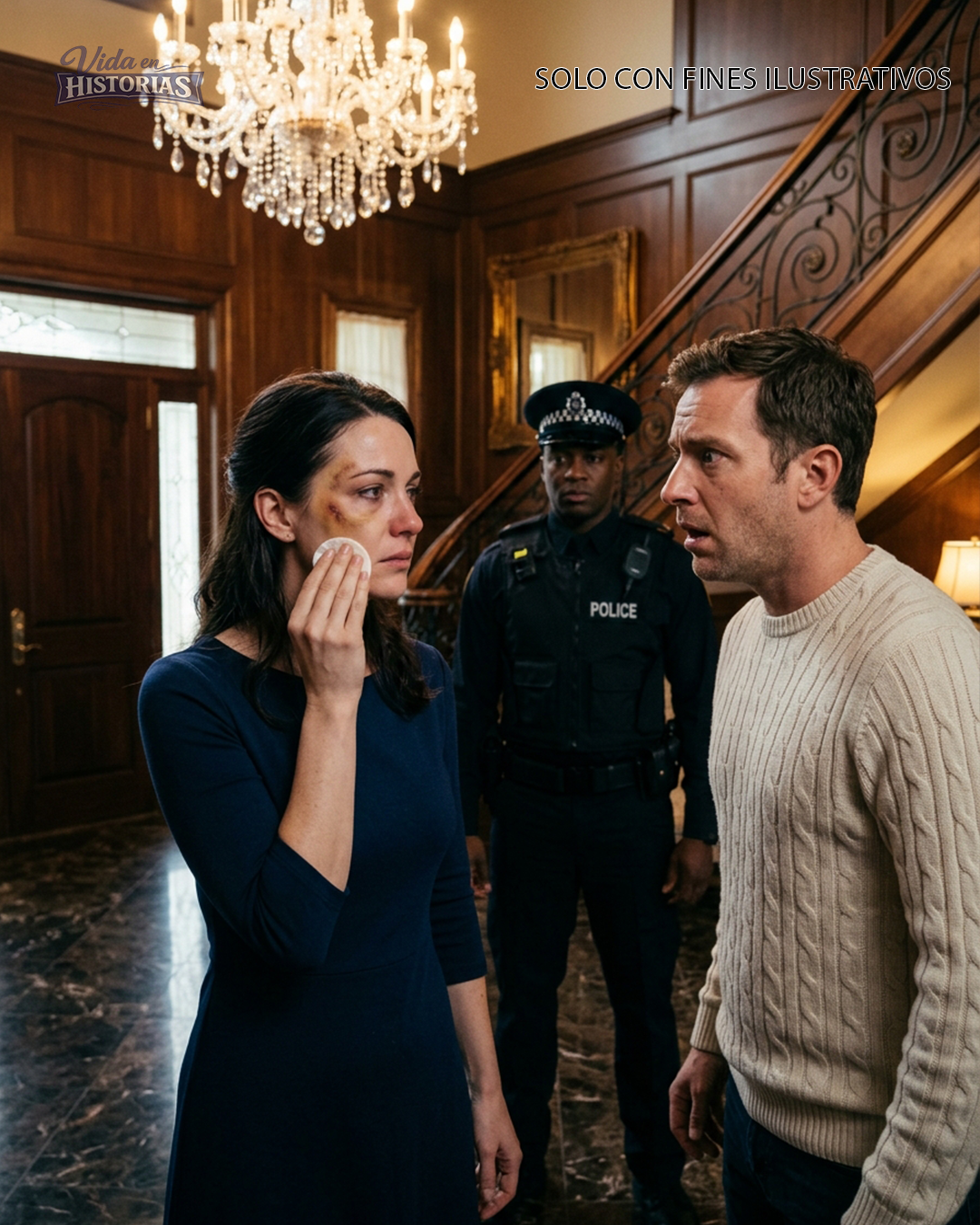
My Husband Said This Was His House—Then I Wiped Off My Concealer In Front Of The Police
When the officer snapped the handcuffs onto my husband’s wrists, Richard looked at me like I was a lamp that had suddenly spoken.
“This is my house,” he said.
His voice was not loud. Richard Monroe rarely raised his voice in front of strangers. Loudness, in his family, was considered poor breeding, poor education, or poor control. He preferred quieter methods. A lowered voice. A locked jaw. A hand resting on the back of my neck that looked affectionate from across a dining room. A sentence delivered with a smile that told me exactly how much worse things would become later if I embarrassed him now.
But that Saturday afternoon, in the marble foyer of our Ghent house, with two uniformed officers standing beside him, my attorney at the threshold, a forensic financial investigator opening his document case, and his mother frozen near the dining room archway with one hand at her pearls, Richard finally sounded ordinary.
Afraid.
“This is my house,” he said again, as if repeating it might make the walls remember incorrectly.
I stood beneath the chandelier holding a makeup wipe between two fingers. The winter light coming through the tall windows made the marble floor look cold enough to skate on. The house was silent in a way it had never been silent before. Not peaceful.
Waiting.
I pressed the wipe against my cheekbone and dragged it down slowly.
The concealer came away in one pale streak.
Underneath it, the bruise bloomed into view.
Purple, black, yellow at the edges, spreading from my cheekbone toward my eye like weather moving in over the coast.
No one spoke.
Not Officer Vowell.
Not Officer Aruso.
Not Saraphene Sterling, my attorney, who had already seen the medical photographs that morning and still held her face perfectly still.
Not Apprentice Gallow, the forensic financial investigator who had spent months following money through shell companies and offshore accounts.
Not Beatrice Monroe.
That silence was the first gift of the day.
I let it hold.
“I went to the clinic at 6:30 this morning,” I said. My voice sounded almost gentle. “Photographs. Medical report. Signed, witnessed, and filed with the precinct before nine.”
Richard stopped breathing.
It was small, almost invisible. His chest halted beneath his sweater. His eyes moved from my face to the officers, then to Saraphene, then back to me. He had always been handsome in a clean, severe way—dark hair, architectural jaw, a mouth built for disapproval. Even with cuffs closing around his wrists, he looked like the kind of man committees trusted and restaurant hosts recognized.
I remember thinking how strange it was that I was not angry.
I should have been. Any reasonable person would have been. But anger had done its work months earlier, quietly, privately, in bathrooms and parked cars and the dark hours before dawn. I had been angry when Richard began describing my money as “our flexibility.” I had been angry when his mother sat in my chair and discussed my studio as if it were already storage. I had been angry when he called my boundaries “female anxiety.”
By that Saturday, anger had burned itself down into calculation.
I was not angry anymore.
I was finished.
My name is Victoria Alane, and six months into my marriage, I learned the first thing Richard Monroe truly wanted from me was not love.
It was absorption.
He wanted my name softened into his. My house folded into his family. My money blurred into marital flexibility. My studio turned into his mother’s private suite. My silence made permanent enough that no one would ever know how much of his life stood on things that had never belonged to him.
The house was mine before the marriage.
That sentence is simple now. It was not simple then.
It was a renovated brick Georgian in Ghent, not far from the Elizabeth River, with black shutters, a slate roof, a marble foyer Richard loved more than he admitted, and an east wing full of northern light. I bought it through my trust before I met him, after selling a smaller condo and deciding, for once, to let myself want space.
The east wing was my studio.
I painted there. Badly at first, then less badly, then privately enough that quality no longer mattered. I liked the smell of linseed oil, the scrape of a palette knife, the way color could sit quietly until another color made it confess.
Richard moved in after we married.
He signed an occupancy agreement I framed as property and insurance paperwork, which it partly was. He did not read it.
“Women’s paranoia,” he said, kissing the top of my head while signing where I pointed. “You and your legal documents.”
I smiled.
That became one of his favorite household phrases.
Women’s paranoia.
It covered my separate account. My locked desk drawer. My refusal to merge assets. My insistence that his mother Beatrice not have a key—which he ignored three months later.
Then Beatrice decided she wanted my east wing.
“Mother’s apartment is becoming difficult,” Richard said one Sunday morning while I cleaned brushes at the studio sink.
“Is she looking for another place?” I asked.
He leaned against the doorframe. “We have room.”
I knew before he said it.
“The east wing would be perfect.”
“For your mother?”
“She needs privacy. Her own sitting room, bedroom, bath. Elegant. Temporary, of course.”
“No,” I said.
Richard blinked.
That one small word changed the air.
“It’s our house,” he said.
“It’s my house.”
I had never said it like that before.
The room went very quiet.
Richard smiled, but his eyes did not. “That’s not how marriage works, Victoria.”
“Maybe not yours.”
The slap did not come that day.
That is how these things build. First comes the closed door. Then the cold silence. Then apology-adjacent flowers. Then dinners where his hand tightens under the table when you almost correct his mother. Then the day he tells you she is moving in Saturday, and when you say no, he finally shows you the hand behind the smile.
But Richard had forgotten something.
My father taught me one rule before he died.
Never let anyone count your money for you.
So while Richard thought I was becoming obedient, I called Saraphene Sterling. I hired Apprentice Gallow. I documented everything. And by the time Richard told me to cover the bruise, wear the blue dress, and smile for his mother’s lunch, I already knew the officers were coming.
If you want to know what happened after Victoria wiped off the concealer in front of the police—and why Beatrice panicked when the offshore charity transfers were opened in that marble foyer.
Richard’s lawyer arrived twelve minutes after the handcuffs clicked shut.
Not because Richard requested him.
Because Beatrice did.
“You are not saying another word,” she snapped the moment the tall gray-haired attorney crossed the foyer. “Richard, do you hear me? Not another word.”
For the first time since the officers entered the house, Beatrice Monroe sounded frightened enough to forget elegance.
The attorney introduced himself as Edwin March, all polished shoes and controlled breathing, but the moment Saraphene Sterling handed him the preliminary injunction packet, the color left his face.
He flipped through the pages once.
Then again.
Then more slowly.
“Oh,” he said quietly.
That one word pleased me more than I expected.
Because good attorneys only say “oh” like that when they realize the disaster is real.
Officer Vowell shifted beside Richard. “Sir, we need to proceed.”
Edwin looked up sharply. “On what grounds exactly?”
Saraphene answered before the officer could.
“Domestic assault with photographic evidence, medical certification, witness corroboration, unlawful coercive control documentation, attempted fraudulent transfer of protected trust assets, and ongoing financial concealment investigations.”
Beatrice actually laughed.
It burst out of her like shattered glass.
“This is absurd. My son is a financial partner at one of the most respected firms in Virginia.”
“Formerly respected,” Apprentice Gallow said mildly.
That was the first time he spoke.
Until then, he had stood near the console table quietly organizing folders with the calm of a man arranging weather reports.
Richard turned toward him immediately.
“What did you say?”
Gallow opened the black document case.
“Three shell companies,” he said. “Two charity laundering routes. One offshore holding account in Curaçao. And approximately 2.8 million dollars redirected through donor-advised funds over sixteen months.”
Silence.
Even the officers looked startled.
Beatrice stared at him blankly. “That’s impossible.”
Gallow slid several pages onto the marble entry table.
“It actually became fairly possible once your son began using marital access assumptions to justify asset movement.”
Richard’s face changed then.
Not guilt.
Not shame.
Calculation.
I recognized it immediately.
It was the expression he wore before deciding which version of reality he intended to sell.
“This is because of the house,” he said suddenly, turning toward the officers. “My wife is emotional. We had an argument about property arrangements involving my mother. She’s retaliating because I insisted we behave like a married couple financially.”
Officer Aruso did not respond.
Richard kept going.
“She has anxiety issues. Obsessive documentation habits. She records conversations. Keeps files. She—”
“Yes,” I interrupted softly. “I did.”
I walked toward the foyer table.
Then I opened the cream-colored folder Saraphene had placed there earlier.
Inside were photographs.
Bank statements.
Copies of occupancy agreements.
Voice transcript summaries.
And one particular document.
I handed it to Officer Vowell.
He scanned it briefly before lifting his brows.
“What is this?”
“The amended property transfer draft Richard attempted to submit three weeks ago.”
Richard went still.
Beatrice looked sharply at her son.
I continued calmly.
“He forged preliminary marital authorization language using a duplicated digital signature from our insurance renewal forms.”
“That’s a lie,” Richard snapped.
“It isn’t,” Saraphene said.
She removed another sheet.
“Metadata timestamps confirm document alteration. As does the notary inconsistency.”
Edwin March slowly closed his eyes.
Not dramatically.
Just the exhausted expression of a man realizing his client had wandered from civil liability into criminal stupidity.
Beatrice moved first.
Not toward her son.
Toward me.
“You vindictive little creature,” she whispered.
Officer Aruso stepped between us instantly.
And suddenly something fascinating happened.
Beatrice Monroe—the woman who hosted museum galas, chaired restoration committees, and once corrected my pronunciation of Bordeaux in front of twelve guests—forgot herself completely.
“She trapped him,” she hissed. “You think this woman is innocent? Richard married beneath himself and this is the reward.”
“Mother,” Richard warned.
“No!”
Her voice cracked through the foyer.
“She flaunted that house from the beginning. Separate accounts, separate paperwork, separate rooms in her mind. She emasculated you.”
I looked at her quietly.
Then I asked the question that finally destroyed the room.
“Did you know he moved money through your charity foundation?”
Everything stopped.
Even Richard.
Beatrice blinked.
Once.
Twice.
“What?”
Apprentice Gallow pulled another folder from the case.
“The Monroe Arts Education Initiative,” he said. “Excellent choice, actually. Small enough to avoid scrutiny. Prestigious enough to discourage questions.”
Beatrice stared at the papers.
“No.”
Richard spoke immediately.
“She doesn’t know anything about this.”
But it was too fast.
Too rehearsed.
Too protective.
And for the first time that afternoon, Beatrice looked afraid of her son instead of for him.
Gallow continued.
“Several transfers were routed through foundation administrative channels before being redirected into consultancy retainers connected to Monroe Strategic Holdings.”
Edwin March rubbed one hand over his mouth.
“Jesus Christ.”
Richard lunged then.
Not at me.
At the documents.
Officer Vowell caught him before he reached the table, forcing him back as papers scattered across the marble floor like white birds.
“Do not touch those,” the officer barked.
“This is privileged financial material!” Richard shouted.
“No,” Saraphene replied. “It’s evidence.”
And there it was.
The moment.
The exact tiny fracture where Richard realized control was gone.
Not weakened.
Gone.
I watched it happen in his eyes.
Men like Richard survive through atmosphere. Through confidence. Through the assumption that everyone around them will continue participating in the version of reality they design.
But reality had shifted.
The officers were no longer politely uncertain.
His attorney was no longer defensive.
His mother was no longer composed.
And I was no longer afraid.
That last part unsettled him most.
“You planned this,” he said to me quietly.
“Yes.”
“You let me walk into this house.”
“Yes.”
His jaw tightened.
“You’re enjoying this.”
I thought about that carefully before answering.
“No,” I said. “I’m surviving it.”
For a second, something almost human crossed his face.
Not remorse.
Recognition.
As if he finally understood I had been serious every time I said no.
Officer Vowell began guiding him toward the door.
Beatrice suddenly moved again.
This time toward me with tears in her eyes.
Real tears.
“You could stop this,” she whispered.
I almost pitied her.
Almost.
But then I remembered the lunch three weeks earlier.
Her sitting in my chair.
Her discussing renovations to my studio while I served soup.
Her smiling when Richard squeezed my knee hard enough beneath the table to leave bruises.
Her saying, “Marriage means yielding gracefully, Victoria.”
So I looked directly into her eyes and answered gently.
“No, Beatrice. He should have stopped earlier.”
Richard twisted once before reaching the front steps.
“This will destroy you too,” he said.
I smiled faintly.
“The house is still in my name.”
The winter wind hit the foyer as the front door opened.
Cold air rushed across the marble floors.
And Richard Monroe—who had spent six months trying to absorb my life into his—was led out of my home in handcuffs while his mother stood trembling beneath my chandelier.
The silence afterward felt enormous.
Beatrice sat down slowly on the staircase.
Not elegant anymore.
Just old.
Edwin March remained near the doorway holding the injunction packet like something radioactive.
Finally, Saraphene turned toward me.
“You all right?” she asked.
I looked toward the east wing.
Toward my studio.
Toward the tall windows full of pale afternoon light.
For the first time in months, I could breathe inside my own house.
“Yes,” I said softly.
And this time, it was true.
