Physical Address
304 North Cardinal St.
Dorchester Center, MA 02124
Physical Address
304 North Cardinal St.
Dorchester Center, MA 02124

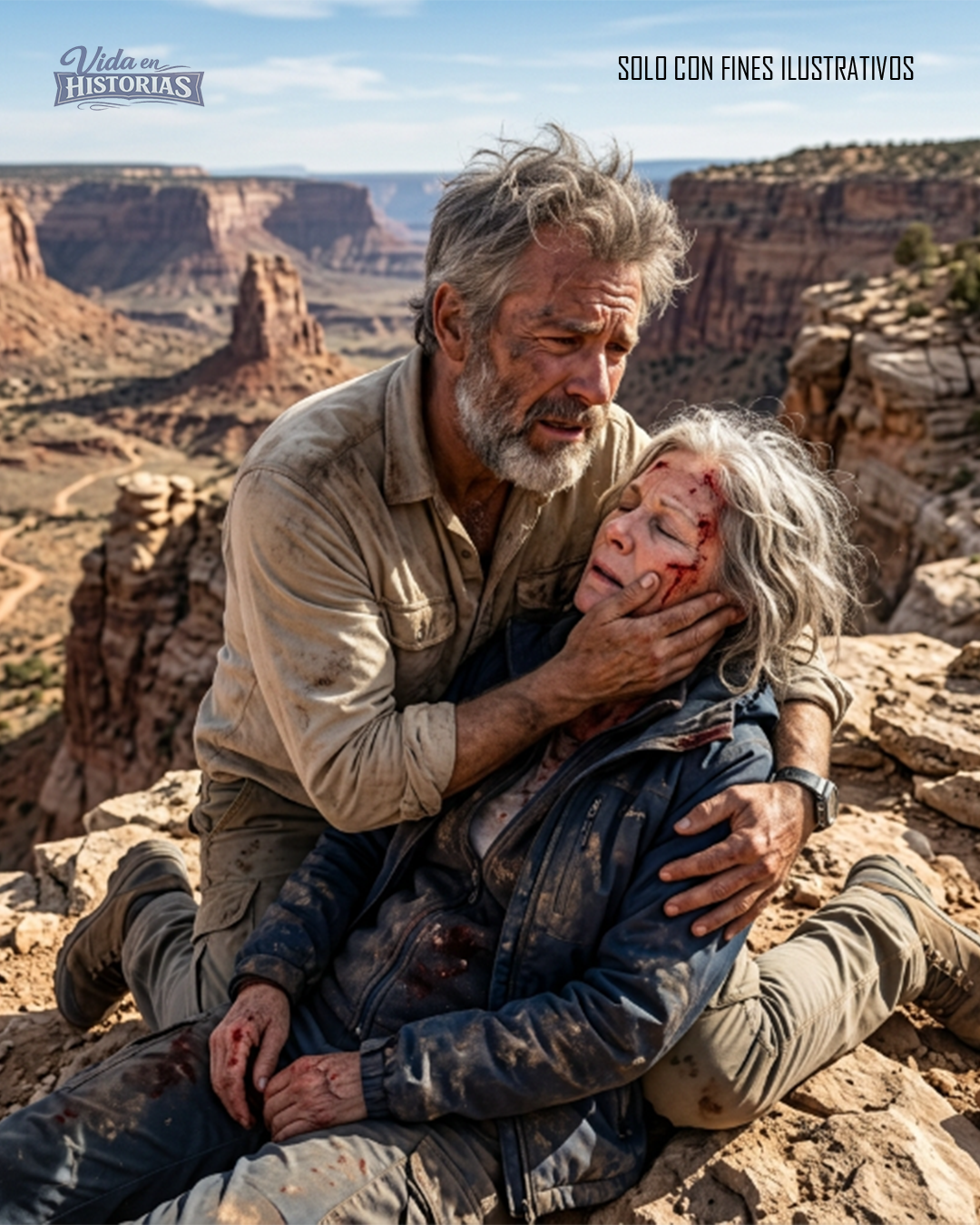
I never thought that at fifty-nine years old I would have to pretend to be dead to survive my own daughter.
My name is Elena Morales. I was born in Oaxaca, and for almost my entire life I believed that family was a refuge. My husband, Arturo, was a carpenter. He had strong hands, full of small scars, but capable of turning any piece of wood into a table, a chair, or a cradle. I was a primary school teacher for thirty years. Together we built a simple white house with bougainvillea at the entrance and the smell of coffee every morning.
We had two children: Diego, the eldest, noble, cheerful, always ready to defend anyone; and Lucía, five years younger, quiet, observant, difficult to understand. When they were children, Diego would run around the patio with the dogs while Lucía stayed in the shade watching, as if from a young age she was calculating something the rest of us couldn’t see.
Even so, I loved her. She was my daughter.
Twenty years ago, Diego died.
The police said it had been an accident. That he slipped near a cliff in the mountains after a party with friends. Arturo and I cried until we lost our voices. Lucía, on the other hand, remained strangely calm. She hugged me, brought me tea, told me we had to move forward. I thought that was her way of grieving.
How naive I was.
Over the years, Lucía married Esteban Robles, a man with a perfect smile and a soft voice. They had two children, Mateo and Sofía, my grandchildren, the light that gave us back a bit of life. Lucía opened a furniture workshop with Arturo’s help, and for a while I believed our family had finally healed.
Everything changed when Arturo and I decided to update our will.
We weren’t rich, but we had our house, land inherited from my parents, and some savings. Lucía insisted too much that we name her the sole heir.
“Mom, Dad, it’s for safety,” she would say. “You’re not young anymore. Esteban and I can take care of everything.”
I felt a strange chill in my chest.
Then came more suggestions. That we sell the house. That we give her power over our accounts. That we change the life insurance. Every visit felt like a business meeting disguised as affection.
One night, after Lucía left, I asked Arturo:
“Don’t you think it’s strange?”
He remained silent for too long.
Then he set his cup on the table and looked at me with eyes full of guilt.
“Elena… there’s something about Diego’s death I never told you.”
I felt the world splitting apart.
Arturo confessed that that night he followed Diego to the cliff. Diego had discovered that Lucía had been stealing money from our accounts for months. He confronted her. They argued. Lucía screamed that Diego had always been the favorite, that everything would be for him, that she was tired of living in his shadow.
And then she pushed him.
Arturo arrived when Diego was already down below, lifeless. Lucía was crying, shaking, swearing it had been an accident.
“She was our daughter,” Arturo said, crying like I had never seen him cry. “We had already lost Diego. I couldn’t turn her in.”
I wanted to hate him. I wanted to scream at him. But the pain was so great that I couldn’t even move.
Then we understood something worse: Lucía hadn’t just killed her brother. Now she wanted our money. And if she had been capable of pushing Diego, she could also push us.
Two days later, Lucía invited us to celebrate our anniversary at a viewpoint in the Sierra Madre.
“It will be beautiful,” she said over the phone. “A family hike, photos, a picnic. Like the old times.”
Arturo and I looked at each other. We knew it was a trap.
But if we refused, they would find another way. So Arturo hid his phone inside the lining of his jacket and activated the recording before we left.
Saturday dawned clear, too beautiful to be the day our own children planned to murder us.
Lucía drove. Esteban was telling jokes. We smiled like two old actors in the cruelest scene of our lives.
After walking for almost an hour, Lucía pointed to a narrow path between the rocks.
“The view from there is spectacular. Let’s take a photo.”
The trail was dangerous. Loose stones, damp earth, a precipice below. Arturo squeezed my hand. I understood: we had to keep going.
When we reached the top, the landscape was beautiful. Blue mountains, low clouds, the valley spread out like a painting. But I could only see the abyss.
“Stand further back,” Esteban asked, raising the camera. “I want the whole landscape to show.”
We took one step. Then another.
I felt the void behind my heels.
Then Esteban lowered the camera and smiled without tenderness.
“This will be your last photo.”
Lucía lunged at us.
Arturo reacted. He grabbed her by the arm and shouted:
“If we’re going to fall, you’re coming with us!”
Everything happened in seconds. Esteban tried to grab her. I lost my balance. The four of us rolled toward the void.
I remember the wind hitting my face. I remember my own scream. I remember thinking about Diego.
The impact against the rocks knocked the air out of me. A brutal pain shot through my body. I wanted to move, but a weak voice stopped me.
“Elena… don’t move. Pretend you’re dead.”
It was Arturo.
I obeyed.
Lucía groaned a few meters away. Esteban cursed. They were both still alive.
“And them?” Esteban asked.
I felt clumsy footsteps near me. Lucía leaned over. I held my breath.
“They’re dead,” she said.
Then Esteban let out a choked laugh.
“So it worked.”
“Not completely,” Lucía replied. “We fell too.”
“The story is still the same,” he said. “A rock came loose, your dad tripped, your mom tried to help him and we all fell. We are survivors of a family tragedy.”
I heard every word. Arturo’s phone recorded it too.
Lucía and Esteban managed to drag themselves until they could call for help. When the rescuers arrived, we continued pretending. They put us on stretchers. In the hospital, Lucía came in to see me. She thought I was unconscious.
She leaned close to my ear and whispered:
“You should never have asked questions, Mom. Some truths should stay buried… like Diego.”
A nurse named Mariana heard everything.
When Lucía left, Mariana approached me.
“Mrs. Elena, if you can hear me, move a finger.”
I moved it.
Her eyes filled with horror.
“Did they do this to you?”
I moved my finger three times.
Mariana called the doctor and the police. Arturo, from another room, handed over the phone. The recording had the threat, the push, Esteban’s confession, and Lucía’s voice talking about Diego.
That same night, Lucía and Esteban were arrested.
During the trial, the full truth came out. Diego’s case was reopened. Arturo testified through tears. So did I. It wasn’t easy. Forgiving Arturo for his silence took me months, but I understood that he had also lived imprisoned by his guilt.
Lucía was convicted. So was Esteban.
The most painful thing was looking at my grandchildren, Mateo and Sofía, asking why their mom wasn’t coming home. We didn’t lie to them, but we also didn’t give them hatred. We told them that adults sometimes do terrible things and that it wasn’t their fault.
Arturo and I survived with scars. He walks with a cane. I still feel pain when the weather changes. But we are still alive.
We sold the big house and moved to a smaller one in Oaxaca, near a school. In the patio, Arturo built a wooden bench with Diego’s name carved on the back. Every Sunday, Mateo and Sofía come to eat with us. They run among the bougainvillea like their uncle used to run.
One afternoon, Sofía asked me:
“Grandma, do you still believe in family?”
I looked at Arturo, sitting in the sun, sanding a small wooden box for Mateo. I looked at the photo of Diego on the wall. I looked at my grandchildren, innocent, free from the poison that destroyed their mother.
And I answered:
“Yes, my child. But now I know that family is not always blood. Sometimes, family is who saves you, who believes you, who stays with you after the fall.”
Mariana, the nurse who helped us, visits us every Christmas. We call her our daughter of the heart.
Life didn’t give us Diego back. Nothing ever could. But the truth, even though it came late, set us free.
And every morning, when the aroma of coffee fills the house and Arturo takes my hand, I give thanks for having obeyed that phrase that saved my life:
“Pretend you’re dead.”
Because I pretended to be dead once.
And thanks to that, I was able to live again.
