Physical Address
304 North Cardinal St.
Dorchester Center, MA 02124
Physical Address
304 North Cardinal St.
Dorchester Center, MA 02124

—
My name is Valeria Moreno. I’m twenty-eight years old. Emilio was twenty-seven. We had been together for almost three years, one of them living in the same apartment in Colonia Del Valle, in Mexico City. Long enough that a phrase like that should never have come without consequences. Long enough that I shouldn’t have still been surprised at how easily his mother’s opinion could enter our relationship, sit between us, and stay there like a third person with permanent rights.
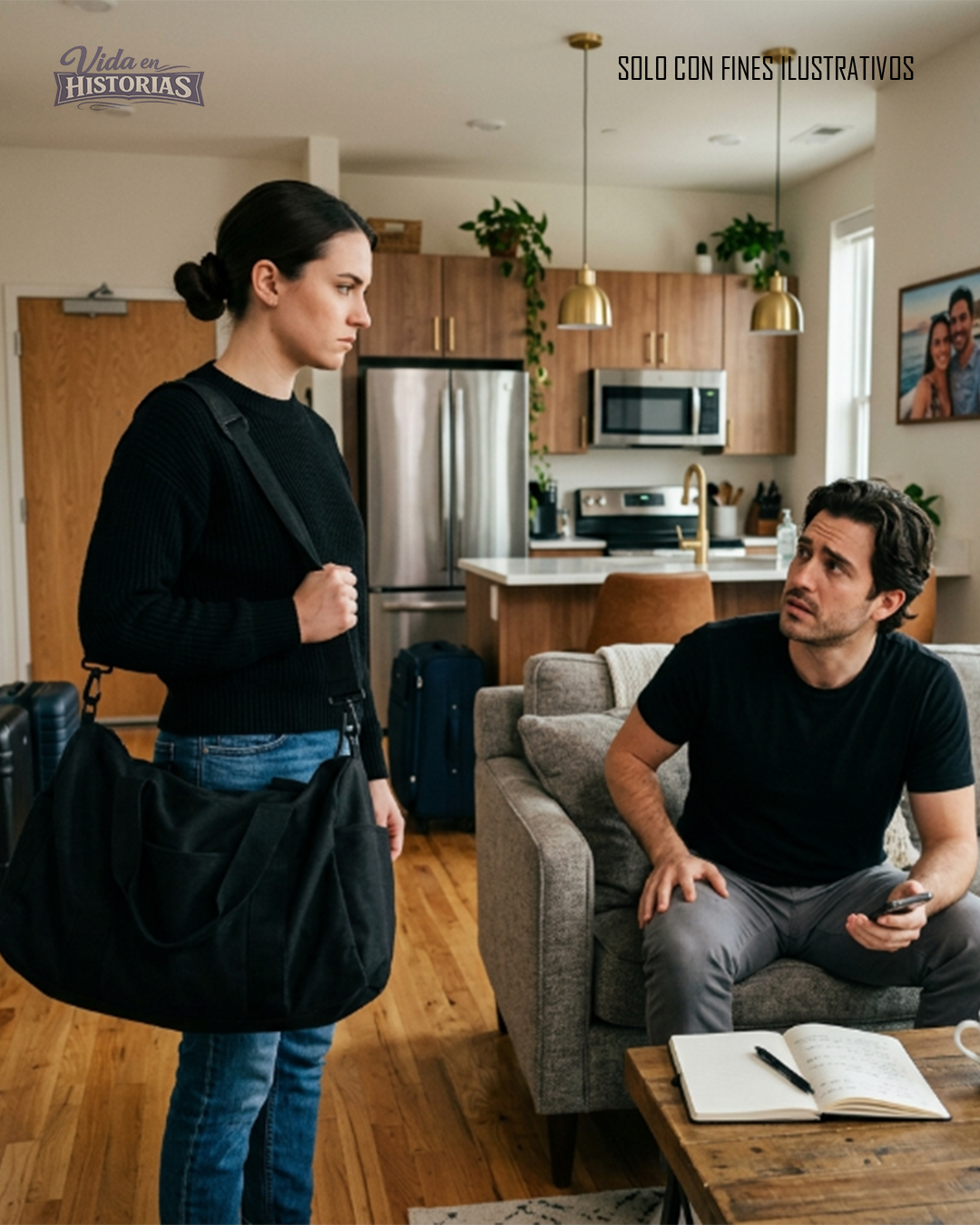
That night we were on the couch, with a movie paused halfway through and a lamp on that made everything look softer than it really was. Emilio held his phone in his hand like a shield. I watched his face, hoping he would hear himself, look up, see my expression, and back down. I hoped the man I fell in love with would appear. That he would choose me. That he would tell me he was sorry.
He didn’t.
He kept staring at the screen and said, with an almost bored calm:
“I don’t want to fight, Vale. I’m just being honest. My mom thinks I could be with someone better.”
There it was.
The cruel part wasn’t that his mother thought it. The cruel part was that he delivered that opinion to me as if it were evidence in a trial he had already decided.
His mother, Mrs. Patricia Salgado, had always been present in our relationship like a constant evaluation: asking about my job, my plans, my salary, my schedule, my goals. All disguised as concern. All concern turned into disappointment. At first, Emilio defended me.
“Mom, relax,” he would say. “Vale is fine.”
Then he started repeating her questions on the way home. Later he stopped defending me completely.
It didn’t happen suddenly. It was slow. Like watching someone let themselves be trained.
I noticed it in the way he changed after talking to her. He would hang up and come back with tense shoulders, with a different voice, with a tone that didn’t seem like his. He told me he was just trying to plan for the future, but planning shouldn’t feel like being measured.
A few weeks before that night we had gone to Querétaro for his cousin’s engagement party. His family loved those events: long tables, coordinated outfits, overly loud laughter, perfect photos with tensions hidden underneath. His mother arrived impeccable, with perfect hair and a gaze already inspecting me like someone checking seams.
She hugged Emilio first, longer than necessary. Then she touched my shoulder with two fingers.
“Oh, Valeria,” she said, smiling without warmth. “You look… comfortable.”
Emilio laughed as if it had been a compliment.
I smiled because I had already learned that reacting only gave her more material.
They hadn’t even served the appetizer when she leaned over the table and said:
“Remind me, what do you do? I always forget.”
I calmly replied that I worked in patient care at a private clinic and was finishing a certification to move up to administrative coordination. She nodded slowly, as if I had said I collected coupons. Then she turned to Emilio.
“And you’re still carrying most of the expenses, right? With this economy, young men have to be very careful.”
Emilio didn’t correct her. He didn’t say we split expenses. He didn’t say I had covered two months of rent when his car broke down and he didn’t want to ask for help. He just cleared his throat and said:
“We’re fine, Mom.”
And then he looked at me as if I should help him make the moment less uncomfortable.
On the way back to the apartment, on the highway, he was tapping the steering wheel with one hand.
“She’s just worried,” he told me, as if reading from a script. “She doesn’t mean to be mean.”
I looked at the lights passing over his face.
“Your mom doesn’t have to like me. But you do have to respect me.”
He sighed as if I were complicating his life.
“I do respect you. She just thinks that… I don’t know… you could be more compatible with me.”
“Compatible how?”
He took a moment to answer.
“She thinks you’re not as ambitious as I am.”
I felt something small and hard forming behind my chest. It wasn’t heartbreak yet. It was a warning.
Because what Mrs. Patricia never saw — and Emilio saw less and less — was what I did to make our life work. I didn’t do it for gratitude. I did it because I thought we were building something together. I carried the mental calendar for both of us. I scheduled medical appointments he forgot until his tooth hurt. I paid bills before they were due. I did the grocery shopping when he said he was short on money. I talked to the landlord. I waited for the plumber. I remembered the names of his coworkers, his boss’s birthday, the details he needed to feel competent in places where he felt insecure.
I knew exactly how he liked his coffee: plenty of cream, but not too much, because he hated when it tasted sweet.
None of that looked impressive on paper. None of that appeared when his mother asked what I contributed.
And Emilio wasn’t always like this.
The first year he thanked me with genuine surprise, as if no one had ever taken consistent care of him before. He would hug me from behind while I cooked and rest his chin on my shoulder.
“I don’t deserve you,” he would say.
I would laugh and tell him to stop being dramatic.
The problem was that the softer I made his life, the more he began to believe that softness was automatic. As if love were a basic service. Like electricity or water.
And when his mother criticized me, he began to treat that criticism as if it were a reasonable question we should review together, not a lack of respect that should be shut down immediately.
The contempt seeped in through small moments that were easy to justify if one wanted to keep the peace. Like the time, at my friend’s birthday dinner, his mother called in the middle of the meal. Emilio answered right away, got up from the table, and returned five minutes later saying:
“My mom says it’s weird that we’re spending money going out when we should be saving for a house.”
I was the one paying the bill, because he had told me that week he was tight on money.
I looked at him, expecting him to understand the humiliation. He didn’t.
“Can we not make a drama right now?” he said.
So when that night on the couch he said: “My mom thinks I could be with someone better,” it didn’t feel like lightning. It felt like the final sound of something that had been cracking for a long time.
I looked at him and felt something settle inside me. Not anger. Not sadness. Clarity.
“You’re right,” I said.
That did make him look up.
“Excuse me?”
“You’re right.”
He blinked, confused.
“About what?”
I stood up.
“About the fact that you don’t have your own opinion. And that tells me everything I need to know.”
His laugh was short and dry.
“Don’t be dramatic.”
I didn’t respond. Because if I responded, I knew I would end up explaining, translating, softening, asking someone to choose me after they had told me I was optional.
That night I slept on the edge of the bed, staring at the ceiling, while he breathed beside me as if nothing important had happened. In the middle of the night he turned over and murmured:
“You’re still mad.”
As if my dignity were a passing tantrum.
The next morning he left for work with a distracted kiss on the cheek and an absurd reminder:
“Don’t forget to take out the trash.”
I waited for the door to close.
Then I went to the closet and took out my suitcases.

I packed in silence, not because I was hiding, but because I no longer needed the spectacle. I folded my clothes as always. I left the things I had bought him: a jacket, some sneakers, a scarf from a trip to Puebla. I walked through the apartment one last time and realized how much silent life I had left there. The plant that was still alive because I watered it. The notes on the fridge. The on-time payments. The idea of home that from the outside seemed mutual.
I took a pen and left a note on the kitchen counter.
“Now you and your mom can figure out together why you’re single.”
I didn’t block him. I didn’t disappear. I went to my sister Sofía’s house in Coyoacán, with two suitcases and a strange peace I hadn’t felt in months.
Sofía opened the door, saw my face, saw the suitcases, and simply said:
“It was about time.”
I told her the short version.
“He said his mom thinks he could be with someone better.”
My sister’s jaw tightened.
“And what did he say?”
“That he was just being honest.”
Before noon my phone was exploding with calls. I didn’t answer any. Then the messages started.
Where are you?
Are you really doing this?
My mom says you’re exaggerating.
That made me laugh out loud. Even then, even with the empty apartment, he was still outsourcing his thinking.
In the afternoon he left a voicemail.
First he accused me of leaving over “a comment.” Then he softened his tone and said he was just venting. And at the end he dropped the phrase that confirmed I was doing the right thing:
“I didn’t think you would actually leave.”
There was no apology. Only surprise that I had stopped playing my role.
Then he started using mutual friends. The story he told was always the same, dressed up in different ways: that I had misunderstood, that I had gotten emotional, that I had “blinded” him with an extreme reaction. According to him, his mother was very worried about my emotional stability.
That same night I received a long, polished, venomous message from Mrs. Patricia. She spoke about the pressure Emilio was under, about the importance of making good decisions at his age, about how men needed stability and a partner who understood “her place” within his future.
Her place.
I read that line twice.
And then I saw everything with brutal clarity: this wasn’t just a meddling mother-in-law. It was a system. A hierarchy. Emilio hadn’t forgotten to defend me. He had been raised to accept that the center was her, and that the woman he was with had to pass through that filter.
I replied to him only once, the next day:
This is not a group discussion.
He replied immediately.
My mom didn’t mean it like that.
I wrote:
She said it exactly the way you said it.
Two days later he showed up at Sofía’s house. Someone had told him where I was. When I opened the door and saw him in the hallway, I knew nothing he said would change my decision.
“I just want to talk,” he said, already annoyed.
“You shouldn’t be here.”
He rolled his eyes.
“My mom thinks all of this got out of proportion.”
I couldn’t help but laugh.

“Your mom doesn’t get a vote in this relationship.”
That instantly tensed him.
“What a lack of respect.”
“To whom?” I asked. “To her or to you?”
He crossed his arms.
“You always do this. You turn everything into a moral issue instead of fixing it.”
“Fix it how?” I said calmly. “By convincing myself that I am worth it?”
“See, that attitude is exactly why my mom was right.”
There it was again. The echo. The direct channel to her.
I took a deep breath.
“You didn’t just repeat her opinion, Emilio. You believed it.”
He hesitated for barely a second.
“I was confused.”
“No. You were being honest.”
Then he raised his voice.
“And that’s it? Three years and you leave because of that?”
I looked at him with a calmness that scared him more than any shouting.
“I didn’t leave because of that phrase. I left because of all the years I spent making myself smaller so you wouldn’t have to choose.”
Something changed in his face. Until that moment he still thought this was a temporary punishment, a scene, a rebellion that would pass. But seeing me firm, he understood.
I wasn’t going to soften anything. I wasn’t going to rescue him from what he had broken.
“My mom says you’re going to regret this,” he said before leaving.
“I already don’t,” I replied.
He stood still for a second and then left.
That night I cried. Not because I wanted to go back. I cried for myself. For all the time I spent translating contempt into “concern,” silence into “maturity,” cowardice into “confusion.”
The following week I kept hearing from him through third parties. That he was doing badly. That he missed work. That he didn’t understand why I had “blinded” him like that. Until one night he called and I answered.
His voice no longer sounded arrogant. It sounded scared.
“I don’t know what to do now,” he said. “Everything feels unstable.”
Before, I would have rushed to reassure him. That night I didn’t.
“That’s not my responsibility, Emilio.”
He stayed silent. Then he murmured:
“You were the constant. You fixed everything.”
And then I understood the full truth. I hadn’t been his partner. I had been his buffer. The person who absorbed the weight of his mother, his doubts, his insecurities, so he never had to face them directly.
“I’m not a service you hire,” I said. “Nor borrowed peace.”
He cried. He really cried. He told me he didn’t know how to set boundaries with his mother, that he didn’t want to make me feel less, that he just… didn’t know how to get out of it.
“And that’s why I can’t come back,” I replied gently. “Because I need to be with someone who doesn’t make me compete with his mom to be chosen.”
After that call he stopped insisting.
Weeks later I ran into him by chance at a café near our old apartment. He looked different. Not broken, not destroyed, but older. More aware.
He said something that almost touched me.
“I think my mom liked the version of you that stayed quiet.”
I stood up.
“I didn’t.”
He didn’t try to stop me.
Months later, I finished my certification. I was promoted at the clinic. I rented a small apartment on my own. Sofía helped me paint the walls. My aunt brought a plant. I started to feel like I fit inside my own life again.
One afternoon, leaving work, I ran into Andrés, a physiotherapist from the building next door with whom I had already spoken a couple of times at the hospital café. He invited me for coffee. Then another. There was no rush. There was no competition. There was no mother whispering from the background. Just an attentive man who listened, who chose without hesitation, and who never made me feel like I had to prove I deserved to be there.
I won’t say Andrés saved me. No one saves anyone like that. I saved myself.
But I will say that, six months later, when he accompanied me to pick up the keys to my new apartment and saw me crying while standing in the middle of the empty living room, he didn’t ask me to explain or call me dramatic.
He just hugged me and said:
“It looks really good on you to choose yourself.”
And maybe that was my real happy ending.
Not that Emilio understood too late.
Not that his mother stopped giving opinions.
Not that the world gave me the right.
My happy ending was looking at myself in the mirror one ordinary morning, in my own home, with coffee in my hand, my phone on silent, my heart at peace… and realizing that, for the first time in a long time, I was no longer trying to be enough for anyone.
I was just being me.
And that, in the end, turned out to be more than enough.
