Physical Address
304 North Cardinal St.
Dorchester Center, MA 02124
Physical Address
304 North Cardinal St.
Dorchester Center, MA 02124

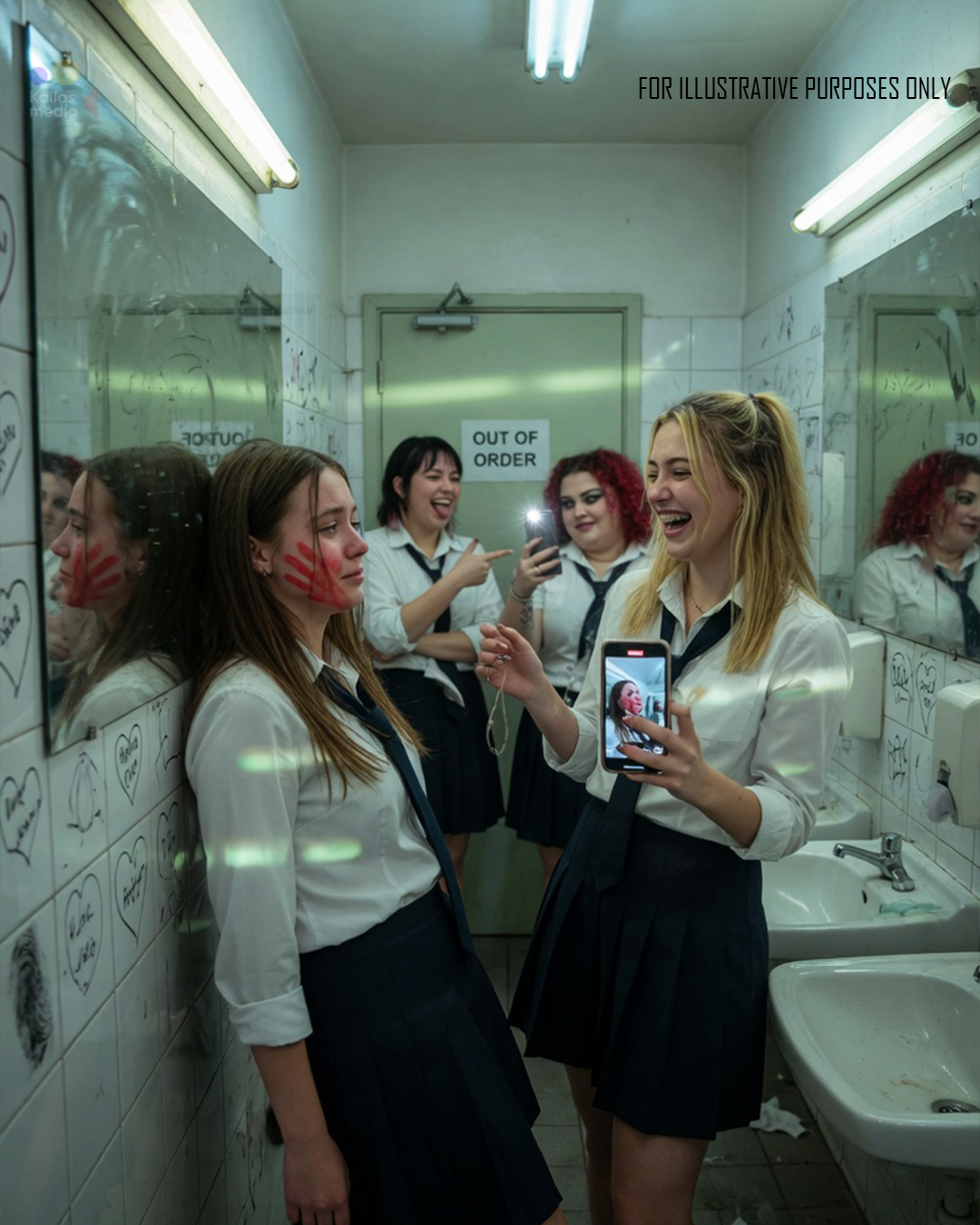
The board chair hadn’t even finished reading the complaint packet when the room turned against her.
That was the exact second the bathroom video stopped being a joke.
One moment, Brielle Kane was still sitting there in her expensive blazer, legs crossed, chin up, acting like the whole hearing was some dramatic overreaction to “girl drama.”
The next, the projector lit up with her own voice.
“Look at her. Too scared to fight back.”
Then the slap.
Then the second slap.
Then the laughter.
And suddenly the same girl who ruled the hallways through fear was staring at herself on a giant screen with the school board, district counsel, parents, and three police-linked youth officers all watching in silence.
That was where the post ended.
This is where the law began.
My name is Evelyn Hart.
At school, I was the quiet girl who read statutes at lunch.
Not because I thought it looked interesting. Because rules were the only thing that ever made sense to me.
People confuse silence with weakness all the time. They see a girl who doesn’t swing back and assume she has nothing behind her.
Brielle made that mistake.
She was the campus thug. Loud mouth. Perfect eyeliner. The kind of girl who treated cruelty like social currency and collected weaker girls the way other people collect accessories.
If she liked you, she used you. If she hated you, she staged you.
Public embarrassment was her favorite sport.
She would shove girls into lockers, snatch phones, spread clips, then smile with that fake innocence adults always fell for because pretty girls who laugh lightly make schools feel safe.
I threatened her for one reason:
I didn’t seem afraid enough.
Not publicly.
And girls like Brielle cannot stand that.
I kept records. I studied the handbook. I knew which staff ignored complaints. I knew which assistant principal softened write-ups to protect “school image.”
That made me inconvenient.
The bathroom incident happened after second period.
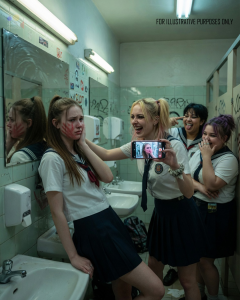
I had barely stepped inside before Brielle and two girls came in behind me. One locked the door. Another lifted her phone immediately. That part was planned. You can always tell with bullies who enjoy power too much — they don’t just hurt people. They frame the shot.
Brielle looked at the legal notebook under my arm and laughed.
“What is it today?” she asked. “You studying how to cry in Latin?”
I said nothing.
That irritated her.
Cruel people hate calm.
She stepped closer, put one hand under my chin, and said, “When people hit you, maybe try looking less pathetic.”
Then she slapped me.
Hard enough that my eyes watered.
The girls around her laughed. The phone kept recording. The mirror caught all of it.
I should have screamed.
I didn’t.
That made her angrier.
So she slapped me again.
Then shoved me against the sink and told the girl filming to “get a closer shot.”
That was the line that saved me.
Not emotionally.
Legally.
Because once the camera became part of the humiliation, Brielle stopped being just a hallway bully with deniable witnesses. She turned herself into documented evidence.
And while she was performing, I was counting.
Assault. Harassment. Conspiracy under the student conduct code. Unlawful recording under district privacy policy. Targeted intimidation. Retaliation risk, because she had already threatened me once for reporting a smaller incident weeks earlier.
Then she made the biggest mistake of all.
She sent the video.
Not broadly. Just enough.
To two group chats.
To one boy in another grade.
To one girl who secretly hated her.
That girl sent it to me before lunch with one message:
You didn’t get this from me. End her.
I did not cry in the counselor’s office.
I did not beg a vice principal to care.
I went home, opened my civil code notebook, school policy handbook, district escalation matrix, and student-board bylaws, and built a case.
That is what Brielle never understood about girls like me.
We do not always fight loudly. But when we decide to fight, we do it in structures.
My mother found me at the dining table at midnight with four color-coded tabs and a legal pad full of citations.
She took one look at my cheek and went very still.
My mother is Judge Miriam Hart.
If you have never seen a woman whose entire life has been spent destroying liars with a calm voice, count yourself lucky.
She did not storm into school. She did not threaten anyone. She did not “handle it” for me.
She sat down.
Read everything I had assembled.
Then she smiled once — the kind that makes dishonest people forget how to swallow.
“Good,” she said. “You have facts.”
That matters.
Because my mother never taught me revenge.
She taught me admissibility.
Now, the variable said I used a loophole in school rules to permanently expel Brielle.
That is exactly what happened.
Here was the loophole:
The school handbook treated first-time physical bullying as suspension-level unless it involved one of three escalators: coordinated filming for humiliation, dissemination across school platforms, or retaliatory witness intimidation after a prior complaint trigger. Brielle had activated all three — but schools almost never stacked them correctly because most students didn’t know the code well enough to demand the mandatory cumulative review.
I did.
Worse for Brielle, the student board bylaws contained one buried clause saying that any student under cumulative review for violence, extortionary humiliation, and digital abuse could be referred automatically for permanent removal if the conduct undermined “basic safety of educational access.”
Basic safety of educational access.
That phrase sounds boring.
It ended her life at school.
By the next morning, I had:
A preserved copy of the video. Time-stamped forwards proving distribution. Screen captures. The prior written incident Brielle had laughed off two weeks earlier. Names of girls she threatened into silence. And a report packet so clean even the assistant principal couldn’t bury it without exposing himself.
The school tried to start small.
Of course it did.
“Conflict resolution.” “Restorative conversation.” “Misunderstood interpersonal escalation.”
I rejected every one of those phrases in writing.
Then I requested formal board review under the cumulative safety clause.
That forced the hearing.
Brielle walked into that board room smiling.
She thought she was there to charm adults again.
Her mother wore pearls. Her aunt sat in the back as “family support.” Two teachers who had always downplayed Brielle’s behavior looked deeply uncomfortable.
Then my mother entered.
Not to argue the case.
Just to sit behind me as my legal guardian.
That changed the oxygen in the room.
People knew who she was. They always do.
The board chair looked twice at the name card. District counsel straightened. Brielle’s smile flickered.
Then the projector turned on.
And her own voice destroyed her.
The video played in full.
No edits. No dramatic music. Just truth.
The slap. The laughter. The instruction to “get a closer shot.” My body against the sink. One of the girls at the door saying, “No one’s coming in.”
That last line mattered too.
Because suddenly this wasn’t childish meanness.
It was unlawful restraint logic inside a school bathroom with recording and targeted humiliation layered on top.
Then I presented the distribution chain.
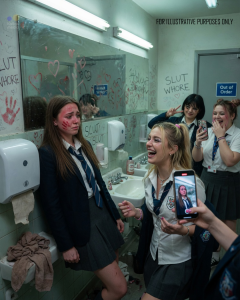
Three forwards. Two chats. One deleted thread recovered by screenshots. One girl’s written statement that Brielle threatened to ruin her if she talked.
You could feel the room changing.
Not toward sympathy for me.
Toward liability.
That is how institutions finally start behaving morally.
Not when they feel bad. When they understand exposure.
Then I introduced the loophole.
Not as a trick.
As law.
I walked the board through Section 8.4 of the conduct code, Section 11.2 of cumulative digital abuse review, and Bylaw 3(c) of board-mandated removal for safety deprivation tied to violence, coercion, and repeated documented harassment. Brielle’s own conduct touched every trigger.
One board member actually interrupted and asked, “Who prepared this filing?”
I answered, “I did.”
That was the truth.
My mother had not written a word of it.
She just raised a girl who did not fold.
Brielle tried crying.
Then denial.
Then she called me obsessed.
That’s when district counsel said the sentence that ended her.
“Miss Kane, the issue is no longer whether you regret it. The issue is whether the code requires removal.”
And the code did.
Unanimous vote.
Permanent expulsion.
Just like that.
The campus thug who slapped girls in bathrooms for entertainment was finished.
She screamed when the ruling hit.
Actually screamed.
Her mother stood up and threatened appeals. District counsel welcomed them. No one looked worried.
Because Brielle’s problems were no longer only school problems.
The board packet had already been copied to juvenile services because the conduct crossed more than one legal line. Assault on a minor. Coercive confinement behavior. Distribution of humiliating video material involving a juvenile victim. Intimidation of witnesses. And because one of the girls later admitted Brielle had done similar things before and used clips to extort favors, the review widened.
That is what took her where the variable said she went.
Juvenile detention intake.
Not forever. Not as fantasy punishment.
But enough.
Enough that the girl who thought rules were decorations spent real time inside a system with locked doors, mandatory service review, and no audience she could charm.
As for me?
The school changed overnight.
Not morally. Administratively.
Suddenly the same people who said, “Try to ignore her,” were rewriting anti-bullying enforcement procedures. The bathroom camera corridor got extended. Reporting procedures got formalized. Student witnesses stopped being “anonymous concerns” and started becoming protected statements.
Then something strange happened.
Girls started coming to me.
Freshmen. Quiet girls. One debate student. Two girls from athletics. A girl Brielle mocked for her accent. Another she had filmed in the locker room mirror and never quite posted, only threatened with.
They sat in front of me with shaking hands and finally told the truth.
Because once one person breaks a bully publicly, everyone else realizes silence was never safety.
The student election came a month later.
I had never planned to run for student council.
I hated popularity games.
But the girls kept pushing.
“You know the rules.” “You actually read things.” “You won’t let them bury us again.”
So I ran.
No glitter posters. No fake slogans.
Just one line:
If they weaponize silence, I will weaponize policy.
I won by a landslide.
Highest vote count in school council history.
That mattered less to me than the reason.
I didn’t win because people suddenly found me charming.
I won because they were tired of watching cruel people rule rooms by volume while adults hid behind paperwork.
I became student body president with the same notebook Brielle mocked in my bag and the same mother’s last name people used to whisper about like it was too dangerous to belong to a quiet girl.
And yes, I used the office.
Hard.
Real reporting channels. Clear disciplinary maps. Witness protection structure. Policy literacy workshops. A student legal rights seminar that filled the auditorium twice.
The best revenge is not watching one bully fall.
It is making sure the hallway stops growing replacements.
My mother never once said she was proud the way other mothers do.
She simply watched me after the election results came in, set a mug of tea beside my notes, and said, “Good. Now make it harder for cowards.”
That was better.
So choose your side and mean it:
Type TEAM LAW if the quiet law girl deserved the boardroom victory and the student presidency. Type TEAM JUSTICE if the bathroom bully getting expelled and sent into juvenile detention was exactly the ending she earned.
